Posts

Showing posts with the label birds

Could bringing back its love song save one of Australia’s rarest songbirds?

Image
The regent honeyeater is an endangered native Australian songbird, with only a few hundred left in the wild. A few years ago scientists noticed something odd – they were mimicking other birds, and unable to sing their own song. Environment reporter Graham Readfearn and Dr Joy Tripovich explain how this species lost its song, and whether teaching it how to sing again could help save it from extinction Photograph: Lachlan L Hall/AP https://www.theguardian.com/australia-news/audio/2022/jan/13/revisited-could-bringing-back-its-love-song-save-one-of-australias-rarest-songbirds

This photographer captures the beauty of Mexico's mountains

Image
Growing up in the remote mountains of Sierra Gorda, Mexico, Roberto Pedraza Ruiz developed a serious case of biophilia.  A term coined by biologist Edward O. Wilson, biophilia -- meaning "love of life" -- describes the human need to connect with nature.  Pedraza Ruiz -- now a conservationist and photographer -- moved from the bustling central Mexican city of Queretaro to Sierra Gorda, in 1984, when he was nine years old. A bumblebee humming bird: Photo:: Roberto Pedraza Ruiz   The mountain range covers more than 380,000 hectares -- more than twice the size of Greater London. Its landscapes span rugged mountains, arid deserts and misty cloud forests. Pedraza Ruiz recalls spending his childhood there collecting mushrooms, looking for salamanders and jaguars and raising horses and cows. Sierra Gorda felt like the place he was meant to be.  "I'm a very endemic creature," he tells CNN. "I really think that I belong to these mountains and that's it."...

Rare Mandarin duck makes appearance in Assam after nearly 120 years // Black-browed babbler found in Borneo 180 years after last sighting

Image
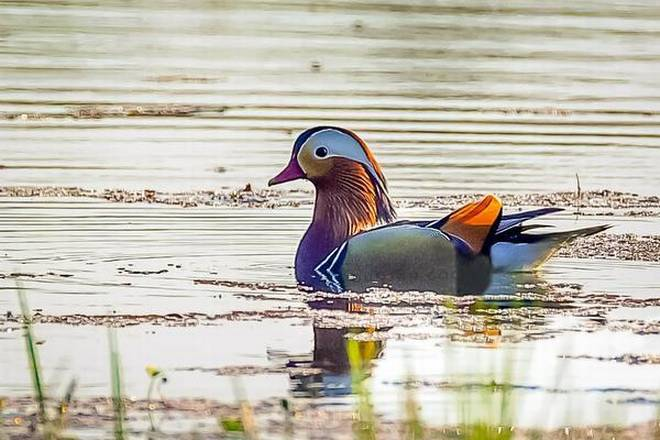
Rare Mandarin duck makes appearance in Assam after nearly 120 years For the last week or so, visitors to Maguri Beel in the Dibru-Saikhowa National Park in upper Assam's Tinsukia district have been treated to a rare sight – one that they have likely never seen before in their lives. The Mandarin duck, first spotted by Madhab Gogoi, a birder and tour guide from the Tinsukia district, has returned to the wetland after nearly 120 years. According to the birder who first spotted the duck on February 8, the last time the bird was seen in this part of Assam was all the way back in 1902.  (Photo: Gunjan Gogoi) The Mandarin duck (Aix galericulata), often described as 'the most beautiful duck in the world', was first discovered and logged by Swedish botanist, physician and zoologist Carl Linnaeus in 1758. According to the eBird website, which provides details descriptions of birds from around the world, the duck is native to East Asia. The males are described as “very ornate with bi...

Australian bird photographer of the year 2020: See some exquisite photos of birds

Image
BirdLife Australia’s annual photography awards. From a hungry fairy tern to a thirsty corella, the best images from photographers across Australia have been entered into this year’s prize... Comb-crested jacana by Adam Blyth https://www.theguardian.com/environment/ng-interactive/2021/jan/13/australian-bird-photographer-of-the-year-2020-vote-in-the-peoples-choice-awards

Charmed in lockdown: garden birds by Denis Thorpe – in pictures

Image
I never seemed to have time to study the birdlife around me before; I just liked the idea they were around and I enjoyed their dawn chorus over the years. In a fairly small space I am pleased to be visited regularly by many species of bird. My friendly robins follow me around listening to my mutterings (they later bring some of their youngsters), but most of the birds are extremely shy and need coaxing with refreshments to stay around.  Now, during my isolation vigil, I watch them as carefully as I did when photographing people.... https://www.theguardian.com/environment/2020/nov/26/charmed-in-lockdown-garden-birds-by-denis-thorpe-in-pictures

'Jet fighter' godwit breaks world record for non-stop bird flight

A bird said to have the aerodynamic build of a “jet fighter” has been tracked flying more than 12,000 km (7,500 miles) from Alaska to New Zealand, setting a new world record for avian non-stop flight. The bar-tailed godwit set off from south-west Alaska on 16 September and arrived in a bay near Auckland 11 days later, having flown at speeds of up to 55 mph. The male bird, known as 4BBRW in reference to the blue, blue, red and white rings fitted on its legs, also had a 5 gm satellite tag harnessed on its lower back to allow scientists to track its progress.  It was one of four to leave together from the Alaskan mudflats where they had been feeding on clams and worms for two months.  The male bar-tailed godwit, whose standard weight is between 190gm and 400gm, can double in size before a long flight but is able to shrink its internal organs to lighten the load.... https://www.theguardian.com/environment/2020/oct/13/jet-fighter-godwit-breaks-world-record-for-non-stop-bird-flight ...

Akshaya Nath: This Tamil Nadu village lived in darkness for over 35 days to help a sparrow

A village in Pothakudi in Sivagangai district of Tamil Nadu lived in the darkness for over 35 days to save a bird's life and its family. The village together decided to save the endangered bird. A sparrow had hatched its eggs on the village's main switchboard and the people of the village decided to carry its usual days without streetlights, in order to save the bird. The generous idea of turning off the lights came from a 20-year-old student named A Karuppuraja.  Karpuraja, who initially spotted the sparrow and its eggs said, "Nearly 100 families are there in this region and around 35 streetlights are used here. One day, when we were passing by the switch board, we noticed that a sparrow had laid three eggs. We immediately took pictures of them and posted it in our village WhatsApp group, and asked people to cooperate and not use electricity connected to the switch box so that the eggs hatch and the bird grows." The 35 streetlights were connected to the swit...

Birds of Fair Isle, The Shetlands

Image
Many rare species of bird have been found on the island, with at least 27 first records, and is probably   the best place in  western Europe  to see skulking  Siberian   passerines  such as  Pechora pipit ,  lanceolated warbler  and  Pallas's grasshopper warbler . In April 2008 a  calandra lark  was identified, and in May a  Caspian plover  was observed, only the fourth such record for the UK. On 6 June a  citril finch  was found and identified by islander Tommy Hyndman, a first record for Britain. September was highlighted by  brown flycatcher ,  red-flanked bluetail  and  Siberian thrush . The island is also home to an  endemic   sub-species of  Eurasian wren , the  Fair Isle wren   Troglodytes troglodytes fridariensis .  The red-flanked bluetail (Tarsiger cyanurus),  also known  as the orange-flanked bush-robin.  https://en.wi...

Kate Ng: Cuckoo stuns scientists with longest migration (12,000 km) ever recorded“

Image
A cuckoo has completed one of the longest migrations ever recorded by any land bird after flying more than 7,500 miles (12,000km) from southern Africa to its birthplace and breeding grounds in Mongolia. The bird, named Onon, crossed 16 countries in his “mammoth journey”, facing down ocean crossings and high winds on the way. He arrived at the Church Bird Banding Station in Mongolia at 3.22pm local time on Wednesday, bird conservation organisation Birding Beijing said. A cuckoo lands on a branch in the rain  ( Getty Images ) Onon is home! As of 1530 local time on 27 May 2020 he is in the icinity of Khurkh Bird [Banding] Station, where he was fitted with his tag in June 2019, after a round trip of 26,000km, including 27 border crossings involving 16 countries,” said Birding Beijing on its website, which posts regular updates on the whereabouts of the birds. “Remarkable navigation and endurance. And now he has no time to waste as he needs to set up his territory, defending i...

Covid-19 stalls RSPB rescue of endangered Tristan Albatross chicks from giant mice

Among the places not to be stranded when the world goes into lockdown is surely one of the planet’s most remote islands, renowned for its freakishly giant house mice that have evolved into merciless killers. The Foreign Office has revealed details of one of the trickiest rescues it has had to mount because of the coronavirus pandemic, one involving a 12-day sail across the Atlantic and a 4,000 mile flight in an RAF A400 transport aircraft. A team of 12 conservationists from the Royal Society for the Protection of  Birds  arrived on Gough Island in the south Atlantic in February to begin work on an important, if gruesome, environmental project. Gough Island, which has one of the most important seabird colonies in the world, is the stage for what has been described as  “one of nature’s greatest horror shows”.   Mice from the boats of seal hunters  managed to get on to the island 150 years ago and have somehow evolved to two and even three times the size of ...

One of world’s rarest owl species has chance at survival

Image
One of the world’s rarest owl species has a chance at survival after a breakthrough on a remote Australian island. A pair of morepork owl chicks have become the first in more than a decade to survive in  Norfolk Island ’s national park. There are only about 45 to 50 of the birds left in the world, and researchers and park staff were said to be “ecstatic” when the chicks were discovered. https://www.aucklandzoo.co.nz/animals/morepork Dr James Findlay, director of  Australia ’s national parks, said the find marked a significant step in the recovery of the morepork owl population on the tiny island in the Pacific Ocean. He said: “I’d like to congratulate Parks Australia staff, Norfolk Island community members and researchers for their incredible work over the years to rebuild the population of this very rare bird.  “The fledgling  owls  are being closely monitored by Norfolk Island National Park staff and researchers from Monash University. “The health of ...

Here’s the grim truth about our beautiful world in the age of Trump and the arsonists / The Dangerous Case of Donald Trump

Image
Here’s the grim truth about our beautiful world in the age of Trump and the arsonists It was no mistake, for instance, that, when Donald Trump finally  turned his mind  to the coming pandemic (rather than denying it) as the economy he had been  bragging about  for the previous three years began to crash, one of the first groups he genuinely worried about didn’t include you or me or even his base.  It was America’s fossil-fuel industry. As global transportation  ground down  amid coronavirus panic and a wild oil  price war  between the Saudis and the Russians, those companies were being clobbered.  And so he quickly reached out to them with both empathy and money - promising to  buy tons of extra crude oil  for the nation’s strategic petroleum reserve (“We’re going to fill it right to the top”) — unavailable to so many other endangered Americans.  At that moment he made it perfectly clear that, in an unfolding crisis...

US and Canada have lost three billion birds since 1970

The US and  Canada  have lost more than one in four birds – a total of three billion – since 1970, culminating in what scientists who published a new study are calling a “widespread ecological crisis”. Researchers observed a 29% decline in bird populations across diverse groups and habitats – from songbirds such as meadowlarks to long-distance migratory birds such as swallows and backyard birds like sparrows. “Multiple, independent lines of evidence show a massive reduction in the abundance of birds,” said Ken Rosenberg, the study’s lead author and a senior scientist at the Cornell Lab of Ornithology and American Bird Conservancy. Co-author Adam Smith from Environment and Climate Change Canada called the findings a “wake-up call”. The population losses are consistent with what scientists have counted among  insects  and  amphibians . The study, published today in the journal Science, did not analyze the reason for the drop. But around the world, bi...

Andrew Griffin - Bird that went extinct 136,000 years ago comes ‘back from the dead’ after evolving again

Image
A bird that previously went extinct rose from the dead after it evolved all over again, scientists have found. The last surviving flightless species of bird in the Indian Ocean, a type of rail, has actually been around before, the research found. It came back through a process called "iterative  evolution ", which saw it emerge twice over, the researchers found. It means that on two separate occasions – tens of thousands of years apart – a species of rail was able to colonise an atoll called Aldabra. In both cases it eventually became flightless, and those  birds  from the latter time can still be found on the island now. Iterative evolution happens when the same or similar structures evolve out of the same common ancestor, but at different times – meaning that the animal actually comes about twice over, completely separately. The white-throated rail has made a surprising return. (Charles J Sharp) This is the first time it has been seen in rails, and o...

Natural high: why birdsong is the best antidote to our stressful lives

It’s  International Dawn Chorus day  on Sunday 6 May, and this year the RSPB has released  a single of birdsong  (currentlyat number 11 in the charts) as part of a campaign to draw attention to the dire situation facing British birdlife. Populations of once-common species such as the house sparrow, starling and swift are falling fast, while the nightingale, turtle dove and grey partridge are rapidly sliding towards extinction in Britain. Climate change, intensive farming and pollution are just some of the genuinely existential threats to the future of our birds. And, indeed, to us. Having been a naturalist since before I can remember – more than half a century now – I’m always astonished that so many people fail to make the connection between birds’ wellbeing and our own. Spending time connecting with the natural world is the perfect antidote to the pressures of modern life. Getting close to nature – and especially listening to birdsong – doesn’t just bring ...

Critically endangered kākāpō – the world's fattest parrot – has record breeding season

The world’s fattest species of parrot has had a record-breaking breeding season in  New Zealand , with scientists saying the fortunes of the critically-endangered bird are finally turning around. There are only 147 adult kākāpō alive today, although a few hundred years ago they were one of New Zealand’s most common birds, before being hunted to the brink of extinction, killed by introduced pests, and losing their forest homes to farming. The nocturnal, flightless parrot is one of New Zealanders favourite birds, and is known for its charismatic nature and owl-like face. Because the population is so small every kākāpō has a name – including Ruth, Hoki, Suzanne and Zephyr – and is subject to one of the most intensive management programmes of any species in the world. Infertility and in-breeding have been long-term issues for the birds’ reproductive efforts. But this year 76 kākāpō chicks have hatched and 60 are expected to make it to adulthood, the result of heavy seeding...

Biological Annihilation: A Planet in Loss Mode. By Subhankar Banerjee

It’s now  estimated  that 40% of all bird species are in decline globally and one of every eight is threatened with extinction...  If you’ve been paying attention to what’s happening to the nonhuman life forms with which we share this planet, you’ve likely heard the term 'the Sixth Extinction.' If not, look it up.  After all, a superb environmental reporter, Elizabeth Kolbert, has already gotten a Pulitzer Prize for  writing a book  with that title. The Sixth Extinction / Conservative groups spend up to $1bn a year to fight action on climate change Whether the sixth mass species extinction of Earth’s history is already (or not quite yet) underway may still be  debatable , but it’s clear enough that something’s going on, something that may prove even more devastating than a mass of species extinctions: the full-scale winnowing of vast populations of the planet’s invertebrates, vertebrates, and plants.  Think of it, to introduce an even broa...

Hilary Hanson: Scientists Discover Adorable Bird That's Actually 3 Species In One

Image
A striking yellow, black and white bird spotted in Pennsylvania is actually a hybrid between three different species,  according to a news release from the Cornell Lab of Ornithology.  Extremely observant bird watcher Lowell Burket saw the male bird in the borough of Roaring Spring in May. He noticed that the bird had the physical attributes of the blue-winged warbler and golden-winged warbler, but sang like a third species, the chestnut-sided warbler.  LOWELL BURKET The bird piqued his interest enough that after taking photos and video, he contacted the Fuller Evolutionary Biology Lab at Cornell. “I tried to make the email sound somewhat intellectual so they wouldn’t think I was a crackpot,” he said in the release. Luckily, the lab did not think Burket was a crackpot, and researcher David Toews soon got in touch with him. Together, they found the bird again and took a blood sample and measurements for ID purposes. As it turned out, Burket’s suspicion was r...

Minnesota Birds Are Getting ‘Drunk’ On Fermented Berries, Police Say

Some birds in Minnesota are getting really flocked up on fermented berries, according to police in the city of Gilbert. On Tuesday, the department posted a notice on Facebook warning citizens that it has received several reports of birds that appear to be ”‘under the influence’ flying into windows, cars and acting confused.” Apparently, the birds are getting boozed up from berries that fermented earlier than usual due to an early frost. Matthew Dodder, a self-described “bird guy”  in Palo Alto, California, told The Washington Post that since there’s no such thing as a birdie breathalyzer, you have to look at their in-flight behavior to the level of avian intoxication. “They’ll be flying kind of erratically,” he said. “We typically see them flying lower than usual through traffic. They’re just careless and they’re not looking for cars or other obstacles.” He said robins, cedar waxwings and thrushes are the bird species most likely to tie one on since they eat more...

World's largest king penguin colony has declined by 90%

The planet’s largest colony of king penguins has declined by nearly 90% in three decades, researchers have warned. The last time scientists set foot on France’s remote Île aux Cochons – roughly half way between the tip of Africa and Antarctica – the island was blanketed by 2m of the penguins, which stand about a metre tall. But recent satellite images and photos taken from helicopters show the population has collapsed, with barely 200,000 remaining, according to a study published in Antarctic Science.  Why the colony on Île aux Cochons has been so decimated remains a mystery. “It is completely unexpected, and particularly significant since this colony represented nearly one third of the king penguins in the world,” said lead author Henri Weimerskirch, an ecologist at the Centre for Biological Studies in Chize, France, who first set eyes on the colony in 1982. Climate change  may play a role. In 1997, a particularly strong El Niño weather event warmed the southern ...